Best Water Filter in Bangladesh | Green Dot Limited

WATER FILTER BEST USE FOR DRINKING IN BANGLADESH

Are you finding best water filter? Yes you are now right place. We are offering the best brand LANSHAN, HERON, EASY PURE, TOPPUROR, TOP KLEAN & AQUA PRO water filter in your hand.

We accept as true good health begins with good water. Good water not only for drinking, you have to ensure you are using good water in your every needed. Green Dot Limited is known as trusted source of Best Water Filter Supplier in Bangladesh. All of us may imagine that, one drinking water filter is as best water filters as another, but consider again, all of water filter cannot be serve as a best water filter. The water filter that you buy on fancy may not be giving your family safety. “Most Bangladeshi people decide to select wrong water filter because of lack of deep knowledge about the water filter best for drinking. And most of sellers misguide their customer due to intention to earn more profit. But we follows to provide right information to our customer honestly.
Green Dot Limited is a best water filter supplier in all over the Bangladesh.

Green Dot Limited offers a wide range of best water filter in Bangladesh. We always prefer to select the water filter from reverse osmosis (RO) systems. Reverse Osmosis can ensure 100% safe drinking water from any kind of contaminated water. Our main goal is to provide best water filter to you with ensuring clean and safe drinking water. Our Reverse Osmosis Water filters in Bangladesh can remove 99.9% of virus, bacterial contaminants. It also removes 100% bad smell and provides better tasting and better smelling water.

Our Wide Range of Best Water Filter in Bangladesh

Green Dot Limited offer best water filter in Bangladesh since 2008. We also offer world famous best water filter Brand in Bangladesh such as Lan Shan, Heron, Easy Pure, Top Klean and Aqua Pro. From our world famous leading brands, you can be assured that, you are getting best quality best water filter. It is available to us a variety of purification technologies to meet a wide range of demands, depending on your water issues. We are committed to excellence in both customer satisfaction and best water filter. Our focus not only on best quality water filters, we also focus on best customer services. Our dedicated customer service department always ready to serve you on time service. Our experienced technical people ready to support you as your require.
This Video only for How to work a Best Water Filter?

More details: Green Dot Limited

Wastewater Recycle & Reuse Plant in Bangladesh

Wastewater Recycle & Reuse Plant in Bangladesh. 

We are pioneer in Wastewater Recycle & Reuse Plant in Bangladesh. Green Dot Limited is introducing modern and economical technology in Wastewater Recycle & Reuse Plant in Bangladesh, Zero Discharge Plant in Bangladesh and Effluent Treatment Plant ( ETP) in Bangladesh
There is a water crisis today. But the crisis is not about having too little water to satisfy our needs. It is a crisis of managing water so badly that billions of people - and the environment - suffer badly."  World Water Vision Report
With the current state of affairs, correcting measures still can be taken to avoid the crisis to be worsening. There is an increasing awareness that our freshwater resources are limited and need to be protected both in terms of quantity and quality. This water challenge affects not only the water community, but also decision-makers and every human being. "Water is everybody's business" was one the key messages of the 2nd World Water Forum.
All wastewater are different, So  it is necessary to work with a team that can combine comprehensive knowledge with practical experience in the fields of chemistry, biology, hydraulics, mechanical processes/equipment, instrumentation and control, materials handling and plant layout.
Green Dot Limited can deliver on all the process components that make up a wastewater treatment plant. We have cultivated expertise for designing and implementing such kind of Waste Water Recycle and Reuse Plant, Zero Discharge Plant to save the environment.
Our services include process design, process optimization, plant operations and control systems. Green Dot can also assist clients to develop long-term, sustainable solutions for wastewater treatment including biosolids and other solids waste treatment and disposal, and effluent reuse.
"Services those are available here:" 
  • Facilities of raw water analysis
  • Facilities of planning and development
  • Alternatives and comparison analysis
  • Life cycle assessment
  • Comprehensive facility evaluations
  • Bio-solids management planning
  • Comparative benchmarking
  • Treatability studies and pilot studies
  • Process design
  • Concept design
  • Detailed design for bid/tender
  • Design-build owner's engineering services
  • Design-build and alliance partnerships
  • Construction phase engineering services
  • Construction management and inspection
  • Startup and commissioning services
  • Process and energy use optimization
  • Computerized operations and maintenance manuals
  • Pretreatment programs
  • Permitting and regulatory assistance
  • Utility master planning and asset management
  • Economic analysis and rate studies
  • Program management
www.greendotbd.com

Zero Discharge Wastewater Treatment Plant in Bangladesh

Zero Discharge Wastewater Treatment plant, Zero Discharge Plant, Zero Liquid Discharge Plant, Wastewater Recycle Plant, Waste Water Plant, Water Treatment Plant
Green Dot Limited is the leader of Wastewater Treatment Plant, Effluent Treatment Plant, Sewage Treatment Plant and all kinds of Water Treatment Plant in Bangladesh. We always reserve modern technology and International Brand in our stock.

Zero Discharge Wastewater Treatment Plant:

Zero Discharge Wastewater Treatment Plant in Bangladesh is most essential job to protect our environment. We are pioneer in Zero Discharge Wastewater Treatment Plant in Bangladesh. Green Dot Limited is introducing modern and economical technology in Zero Discharge Plant in Bangladesh, Waste Water Recycle Plant in Bangladesh, Effluent Treatment Plant in Bangladesh and Waste Water Reuse Plant in Bangladesh.
Wastewater reuse is a common practice in developing countries of Asia and Africa and wastewater recycling is common in water scarce regions of the developed countries such as the Australia, Middle East, south west of US, and in regions with severe restrictions on disposal of treated wastewater effluents, such as Florida, coastal or inland areas of France and Italy, and densely populated European countries such as England and Germany. Even in high rainfall countries like Japan, whose mean annual precipitation of 1,714 millimeters (mm), urban wastewater reuse is common due to high population density in some regions, which suffer from water shortages. The developed countries have generated techniques and guidelines for safe reuse of wastewater, which can be adopted by the developing countries.
Zero Discharge Wastewater Treatment systems recycle all the discharged liquid simultaneously, ensuring zero effluent or waste water.
We offer state-of-the-art Zero Discharge Wastewater Treatment systemsZero Liquid Discharge Plant designed and developed in accordance with the latest market requirements. These fully integrated and automated systems incorporate mechanical vapor compression brine concentrator, forced circulation crystallizer and solids dewatering. These systems employ membrane processes, evaporative processes, or a combination of both the processes to achieve Zero Discharge Wastewater Treatment from the plants.
"Advantages of Reuse or Zero Discharge Plant:" By using wastewater after Zero Discharge Wastewater Treatment Plant as a resource rather than a waste product you can:
  • Reduce water bills
  • Use fewer water resources
  • Irrigate the garden during drought or water restrictions
  • Cut down the amount of pollution going into waterways
  • Help save money on new infrastructure for water supplies and wastewater treatment
  • Decrease demand on infrastructure for sewage transport, treatment and disposal, allowing it to work better and last longer.
convert waste water 2convert waste waterWe build Zero discharge plant for various industries using modern technologies like reverse osmosis, multi – effect evaporation, incineration etc. The basic principle of zero discharge plant is to concentrate the impurities of effluent either by reverse osmosis/ nano - filtration/ evaporation and drying the concentrated effluent in flaker dryer/ spray dryer/ incinerator etc.
The selection of technology based on the type of effluent, available excess steam at the site, cost of treatment and capital cost required for the project.
For Further information and prices regarding Zero Discharge Wastewater Treatment Plant, Zero Liquid Discharge, please contact with our expertises:

LAN SHAN RO WATER PURIFIER FOR HOME USE

LAN SHAN RO WATER PURIFIER SYSTEM (SEVEN STAGES MINERAL)

 Lan Shan RO Water Purifier designed for ensuring perfect mineral and increase pH label in your drinking water system . Lan Shan RO water Purifier utilizes the unique properties of a semi-permeable membrane to allow fluid to pass while restricting the flow of dissolved ionic material. Lan Shan RO water Purifier with pressure applied to impure water on the side of such membrane materials, pure water will pass through, leaving most of the impurities behind. The rejection of the dissolved ionic material is a function of both molecular weight and ionic charge. For example, we can expect a nominal 90% rejection of sodium chloride, which means that the product water passing through the membrane will have a concentration of salt approximately one-tenth that of the feed water. The rejection of calcium carbonate (hardness) will be near 95%, while most metallic salts will be rejected at a rate of approximately 98% to 99%.

Green Dot Water Research Laboratory in Bangladesh

Green Dot Water Research Laboratory

Green Dot Water Research Laboratory, established in June, 2015, is one of the finest water testing laboratory in Bangladesh.

We are offering a wide range of water quality tests in an available price.

Phone: +88 02 989858, +88 02 9880152, +88 01678 797 996
Email: chemist@greendotbd.com
Website: http://www.greendotbd.com 
Facebook: https://www.facebook.com/greendotbd

What is Reverse Osmosis Part 01?

Reverse Osmosis is a technology that is used to remove a large majority of contaminants from water by pushing the water under pressure through a semi-permeable membrane. This topic for those audience that has little of no experience with What is Reverse Osmosis ? and will attempt to explain the basics in simple terms that should leave the reader with a better overall understanding of Reverse Osmosis technology.

Perceptive of  Reverse Osmosis

Reverse Osmosis, commonly referred to as RO, is a process where you demineralize or deionize water by pushing it under pressure through a semi-permeable Reverse Osmosis Membrane.

Osmosis Technoligy

To understand the purpose and process of Reverse Osmosis you must first understand the naturally occurring process of Osmosis.

Osmosis is a naturally occurring phenomenon and one of the most important processes in nature. It is a process where a weaker saline solution will tend to migrate to a strong saline solution. Examples of osmosis are when plant roots absorb water from the soil and our kidneys absorb water from our blood.

Below is a diagram which shows how osmosis works. A solution that is less concentrated will have a natural tendency to migrate to a solution with a higher concentration. For example, if you had a container full of water with a low salt concentration and another container full of water with a high salt concentration and they were separated by a semi-permeable membrane, then the water with the lower salt concentration would begin to migrate towards the water container with the higher salt concentration.


A semi-permeable membrane is a membrane that will allow some atoms or molecules to pass but not others. A simple example is a screen door. It allows air molecules to pass through but not pests or anything larger than the holes in the screen door. Another example is Gore-tex clothing fabric that contains an extremely thin plastic film into which billions of small pores have been cut. The pores are big enough to let water vapor through, but small enough to prevent liquid water from passing.

Reverse Osmosis is the process of Osmosis in reverse. Whereas Osmosis occurs naturally without energy required, to reverse the process of osmosis you need to apply energy to the more saline solution. A reverse osmosis membrane is a semi-permeable membrane that allows the passage of water molecules but not the majority of dissolved salts, organics, bacteria and pyrogens. However, you need to 'push' the water through the reverse osmosis membrane by applying pressure that is greater than the naturally occurring osmotic pressure in order to desalinate (demineralize or deionize) water in the process, allowing pure water through while holding back a majority of contaminants.

Below is a diagram outlining the process of Reverse Osmosis. When pressure is applied to the concentrated solution, the water molecules are forced through the semi-permeable membrane and the contaminants are not allowed through. 

How does Reverse Osmosis work?

Reverse Osmosis works by using a high pressure pump to increase the pressure on the salt side of the RO and force the water across the semi-permeable RO membrane, leaving almost all (around 95% to 99%) of dissolved salts behind in the reject stream. The amount of pressure required depends on the salt concentration of the feed water. The more concentrated the feed water, the more pressure is required to overcome the osmotic pressure.

The desalinated water that is demineralized or deionized, is called permeate (or product) water. The water stream that carries the concentrated contaminants that did not pass through the RO membrane is called the reject (or concentrate) stream.


As the feed water enters the RO membrane under pressure (enough pressure to overcome osmotic pressure) the water molecules pass through the semi-permeable membrane and the salts and other contaminants are not allowed to pass and are discharged through the reject stream (also known as the concentrate or brine stream), which goes to drain or can be fed back into the feed water supply in some circumstances to be recycled through the RO system to save water. The water that makes it through the RO membrane is called permeate or product water and usually has around 95% to 99% of the dissolved salts removed from it.

It is important to understand that an RO system employs cross filtration rather than standard filtration where the contaminants are collected within the filter media. With cross filtration, the solution passes through the filter, or crosses the filter, with two outlets: the filtered water goes one way and the contaminated water goes another way. To avoid build up of contaminants, cross flow filtration allows water to sweep away contaminant build up and also allow enough turbulence to keep the membrane surface clean.


What will Reverse Osmosis remove from water?

Reverse Osmosis is capable of removing up to 99%+ of the dissolved salts (ions), particles, colloids, organics, bacteria and pyrogens from the feed water (although an RO system should not be relied upon to remove 100% of bacteria and viruses). An RO membrane rejects contaminants based on their size and charge. Any contaminant that has a molecular weight greater than 200 is likely rejected by a properly running RO system (for comparison a water molecule has a MW of 18). Likewise, the greater the ionic charge of the contaminant, the more likely it will be unable to pass through the RO membrane. For example, a sodium ion has only one charge (monovalent) and is not rejected by the RO membrane as well as calcium for example, which has two charges. Likewise, this is why an RO system does not remove gases such as CO2 very well because they are not highly ionized (charged) while in solution and have a very low molecular weight. Because an RO system does not remove gases, the permeate water can have a slightly lower than normal pH level depending on CO2 levels in the feed water as the CO2 is converted to carbonic acid.
Reverse Osmosis is very effective in treating brackish, surface and ground water for both large and small flows applications. Some examples of industries that use RO water include pharmaceutical, boiler feed water, food and beverage, metal finishing and semiconductor manufacturing to name a few.

Reverse Osmosis Performance & Design Calculations

There are a handful of calculations that are used to judge the performance of an RO system and also for design considerations. An RO system has instrumentation that displays quality, flow, pressure and sometimes other data like temperature or hours of operation. In order to accurately measure the performance of an RO system you need the following operation parameters at a minimum:
  1. Feed pressure
  2. Permeate pressure
  3. Concentrate pressure
  4. Feed conductivity
  5. Permeate conductivity
  6. Feed flow
  7. Permeate flow
  8. Temperature

Salt Rejection %

This equation tells you how effective the RO membranes are removing contaminants. It does not tell you how each individual membrane is performing, but rather how the system overall on average is performing. A well-designed RO system with properly functioning RO membranes will reject 95% to 99% of most feed water contaminants (that are of a certain size and charge). You can determine effective the RO membranes are removing contaminants by using the following equation:

Salt Rejection Calculation

The higher the salt rejection, the better the system is performing. A low salt rejection can mean that the membranes require cleaning or replacement.

Salt Passage %

This is simply the inverse of salt rejection described in the previous equation. This is the amount of salts expressed as a percentage that are passing through the RO system. The lower the salt passage, the better the system is performing. A high salt passage can mean that the membranes require cleaning or replacement.

Salt Passage Calculation

Recovery %

Percent Recovery is the amount of water that is being 'recovered' as good permeate water. Another way to think of Percent Recovery is the amount of water that is not sent to drain as concentrate, but rather collected as permeate or product water. The higher the recovery % means that you are sending less water to drain as concentrate and saving more permeate water. However, if the recovery % is too high for the RO design then it can lead to larger problems due to scaling and fouling. The % Recovery for an RO system is established with the help of design software taking into consideration numerous factors such as feed water chemistry and RO pre-treatment before the RO system. Therefore, the proper % Recovery at which an RO should operate at depends on what it was designed for. By calculating the % Recovery you can quickly determine if the system is operating outside of the intended design. The calculation for % Recovery is below:

Recovery Calculation

For example, if the recovery rate is 75% then this means that for every 100 gallons of feed water that enter the RO system, you are recovering 75 gallons as usable permeate water and 25 gallons are going to drain as concentrate. Industrial RO systems typically run anywhere from 50% to 85% recovery depending the feed water characteristics and other design considerations.

Concentration Factor

The concentration factor is related to the RO system recovery and is an important equation for RO system design. The more water you recover as permeate (the higher the % recovery), the more concentrated salts and contaminants you collect in the concentrate stream. This can lead to higher potential for scaling on the surface of the RO membrane when the concentration factor is too high for the system design and feed water composition.

Concentration Factor Calculation

The concept is no different than that of a boiler or cooling tower. They both have purified water exiting the system (steam) and end up leaving a concentrated solution behind. As the degree of concentration increases, the solubility limits may be exceeded and precipitate on the surface of the equipment as scale.

For example, if your feed flow is 100 gpm and your permeate flow is 75 gpm, then the recovery is (75/100) x 100 = 75%. To find the concentration factor, the formula would be 1 ÷ (1-75%) = 4.

A concentration factor of 4 means that the water going to the concentrate stream will be 4 times more concentrated than the feed water is. If the feed water in this example was 500 ppm, then the concentrate stream would be 500 x 4 = 2,000 ppm.

Flux

Flux (Gfd) Calculation

For example, you have the following:
The RO system is producing 75 gallons per minute (gpm) of permeate. You have 3 RO vessels and each vessel holds 6 RO membranes. Therefore you have a total of 3 x 6 = 18 membranes. The type of membrane you have in the RO system is a Dow Filmtec BW30-365. This type of RO membrane (or element) has 365 square feet of surface area.

To find the flux (Gfd):

Flux Calculation Example

The flux is 16 Gfd.

This means that 16 gallons of water is passed through each square foot of each RO membrane per day. This number could be good or bad depending on the type of feed water chemistry and system design. Below is a general rule of thumb for flux ranges for different source waters and can be better determined with the help of RO design software. If you had used Dow Filmtec LE-440i RO membranes in the above example, then the flux would have been 14. So it is important to factor in what type of membrane is used and to try and keep the type of membrane consistent throughout the system.
Feed Water SourceGfd
Sewage Effluent5-10
Sea Water8-12
Brackish Surface Water10-14
Brackish Well Water14-18
RO Permeate Water20-30
To be continue...
*** Collected.

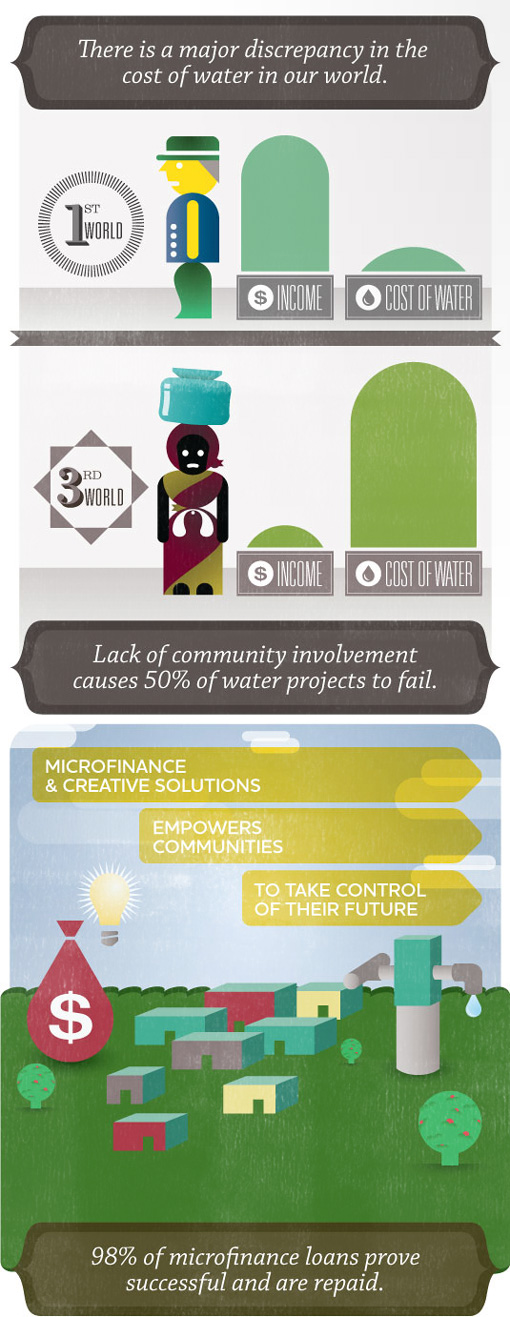
Cost of Water in Our World...


On average, every US dollar invested in water and sanitation provides an economic return of eight US dollars1

Investment in safe drinking water and sanitation contributes to economic growth. For each $1 invested, the World Health Organization (WHO) estimates returns of $3 - $34, depending on the region and technology.6

Those who lack access to water are not a homogeneously poor group. Nearly 66% of people who lack safe drinking water live on less than $2 a day, while 33% on less than $1 a day.1

An evaluation of major sanitation programs in six countries by the World Bank revealed households tend to be the primary investors in household on-site sanitation facilities. If provided access to credit, poor households were found to be able to allocate a significant portion of their income to sanitation investments. Access to credit was found to play a significant role in triggering household sanitation investments.3

People living in informal settlements (i.e. slums) often pay 5-10 times more per liter of water than wealthy people living in the same city.1

Resource Links

Look for more facts in our collection of Water Resource Links.

References

  1. United Nations Development Programme (UNDP). (2006). Human Development Report 2006, Beyond Scarcity: Power, poverty and the global water crisis.
  2. Water and Sanitation Program (WSP). (2000). Linking Sustainability with Demand, Gender and Poverty: A study in community-managed water supply projects in 15 countries.
  3. Water and Sanitation Program (WSP). (2010). Financing On-Site Sanitation for the Poor, A Six County Comparative Review and Analysis.
  4. WHO/UNICEF Joint Monitoring Programme (JMP) for Water Supply and Sanitation. (2010). Progress on Sanitation and Drinking-Water, 2010 Update.
  5. World Health Organization (WHO). (2002). The World Health Report 2002, Reducing Risks, Promoting Health Life.
  6. World Health Organization (WHO). (2004). Evaluation of the Costs and Benefits of Water and Sanitation Improvements at the Global Level.
  7. World Health Organization (WHO). (2008). Safer Water, Better Health: Costs, benefits, and sustainability of interventions to protect and promote health; Updated Table 1: WSH deaths by region, 2004.

Water.org’s urban program focuses on the slums of the capital city, Dhaka

WATER CRISIS IN BANGLADESH 

Collected Content, Source: http://water.org/country/bangladesh/
In Bangladesh, Water.org offers both grant and Water Credit programs, and is addressing safe water needs in urban areas. Water.org’s urban program focuses on the slums of the capital city, Dhaka.

The Water & Sanitation Crisis
Bangladesh’s water crisis affects both rural and urban areas, and is a matter of both water scarcity and water quality. While Bangladesh has made commendable progress in supplying safe water to its people, gross disparity in coverage still exists across the country. Latrine usage is very poor, averaging only 16% in the rural areas. Diarrheal diseases constitute a major health problem in Bangladesh, killing over 100,000 children each year. Thousands of episodes of diarrhea occur in children and adults each day. Diarrheal diseases have close biological and socio-economic links to the problems of malnutrition, poor maternal health, high fertility, and child survival.
In the late 1970s, approximately four million wells were drilled to replace the traditional contaminated surface water sources. The projects made significant headway, and mortality due to water-related diseases declined. However, in 1993, high arsenic concentrations were discovered in the groundwater of several wells in western Bangladesh. Long-term intake of high concentrations of arsenic from drinking water gives rise to a number of health problems, particularly skin disorders. Internal cancers have also been linked with arsenic in drinking water.
In Bangladesh, many wells containing arsenic were closed. Once a well is painted red, signifying the water contains arsenic concentrations above the national standard, community members are no longer supposed to use it.
When people lack access to a well or water point, the community must seek other sources for drinking water, usually returning to the traditional unprotected water sources such as ponds or ditches, or walking to distant wells. These practices dramatically increase the risk of acute bacteriological contamination, leading to greater outbreaks of water-related diseases. These diseases especially affect children who are especially vulnerable to diarrheal diseases.
Urban Crisis
The size of the urban population is increasing at alarming rates. The poor from the rural areas continue to migrate to the urban areas with the hope of being able to earn larger wages to support their families. Many of these people find shelter in Dhaka’s slum communities. These squatter communities are the most densely populated areas in the country. The enormous quantity of people living in such close quarters causes people living in these slums to have very poor health. Most people in these slums live on less than US $2 a day, and many live on less than US $1 a day. Acute poverty, overcrowding, poor housing, and unhealthy disposal of waste all play major roles in the water and sanitation crisis in the urban areas of Bangladesh.
Collected Content 
Source: http://water.org/country/bangladesh/

Economy RO Water Purifier in Bangladesh

5 STAGES ECONOMY REVERSE OSMOSIS WATER PURIFIER / FILTER 
Economy RO Water Purifier in Bangladesh
Made In Taiwan
Brand: HERON; Price: 15,800.00 Taka (BDT)
Web: www.heronwaterpurifier.com
Bangladesh Distributor Ship: Green Dot Limited
5 stage Reverse Osmosis Water Purifier System Designed for where feed water has very low water pressure (under 45psi) or where the source water contains higher than normal amounts of dissolved solids.
RO Technology- even under low water pressure The RO reverse osmosis water purifier system is one of the finest units in its class. It uses high quality booster pump can provides 100psi water pressure to pass through the membrane even under low water pressure area. The booster pump prevents damage and prolongs the life of membrane and improve the TDS rejection.
RO offers safe, good-tasting water at your fingertips It meets all your water quality needs. with 50/100 gallons of clear, refreshing water that is not only healthy to drink, but good for cooking. RO system provides safe, pure water using Reverse Osmosis Technology. It is one of the finest units in its class. It's capable of removing over 95% of total dissolved solids, +99% of all organics and +99% of all bacteria. This system hides away under your sink and puts healthy great-tasting water at your fingertips. It meets all your water quality needs. Our RO comes complete with a NSF certified 3.2 gallons water storage tank and all the necessary fittings, installation kits, extra color 1/4" tubing, and a long-reach chrome faucet. We don't know of any other system at our price that can approaches its performance.
Features of RO Water Purifier:
 3.2 Gallons NSF Standards Water Storage Tank.
 FDA Approved Polypropylene Made Flat Cap Housing.
 Safety approval: TUV (EN60950) & CE MARK
 Automatic Shut-off Valve
 Flow Restrictor, Stainless Steel Check Valve.
 Feed water connector & deliver valve
 Drain Saddle Valve.
 Four Color Coded 1/4 inch Tubing for System Connection
 Completely Assembled & Water leaking testing
 100% Factory Tested and Sterilized Ready for Installation.
 Installation Instruction.
5 stage complete water purifier system
 (Stage 1) Deluxe Sediment Filter : With only five micron rating. It is effective in removing dirt, rust and sand particles.
 (Stage 2) Deluxe Granular Carbon Filter: It takes out 99% of the chlorine and organic chemicals. It provides enhanced reduction of taste, odor, and color.
 (Stage 3) Deluxe Activated Block Carbon Filter : Remove the chlorine, odor, smell and suspending particles..
 (Stage 4) Reverse Osmosis Membrane: A thin film composite high quality membrane that processes 50/100 gallons per day. It removes the following hard water contaminants that may be present in your water: lead, cooper, barium, chromium, mercury, sodium, cadmium, fluoride, nitrite, nitrate, and selenium.
 (Stage 5) Taste and Odor filter: This carbon post filter removes objectionable tastes and odors to enhance the quality of your drinking water. We are using NSF approved post carbon to guarantee the taste of water.
Specification of Water Purifier :
Membrane: 50 GPD With a transformer, available in 220Volt , 50Hz
Safety approval: TUV (EN60950) & CE MARK
Operation pressure: 5 -80 psi
Dimensions: (cm) 37 (L) x 45(H) x 20 (W) - system (cm) 28 (L) x 28(W) x 35 (H)- tank
Weight: 12 kg - system 4 kg - tank
With your own R.O. water Purfier system under your sink working for you twenty-four hours a day, you can have as much purified water at the touch of a finger whenever you want it.
Free to use all you want, clean, safe water on tap, and no more trips to the store.
Installation Instructions:
These instructions are fairly easy to follow and can be installed in a very short amount of time. If however you prefer, you can contact your local plumber or handyman and they can install the system for you rather quickly.
PREPARATION FOR INSTALLATION OF WATER PURIFIER:
This system may be mounted in either a vertical or horizontal position and must be positioned to allow access for service and filter cartridge changing. At the same time, the assembly should be relatively near the spigot to maximize flow rate. The storage tank can be placed on its side without affecting the performance of the system. If there is insufficient room under the sink, the tank may be located in an adjacent cupboard. 
CAUTION FOR YOUR SAFETY ABOUT WATER PURIFIER 
This Reverse Osmosis water purifier USTW unit is designed to operate at water pressure in the range of 40 to 85 PSI. At pressure lower than this, the quantity as well as the quality of water will be reduced. (* If you don't have enough water pressure, it may be wiser to install one of our pumped systems instead.) At higher pressure, severe damage to the system may result. If local water pressure exceeds 85 PSI, a pressure regulator should be installed, reducing the water pressure into the system.

Digital Water Purifier (Hot - Cold - Warm) in Bangladesh

DIGITAL HOT COLD WARM RO WATER PURIFIER (Made In Taiwan)
Summer Offer : 68,500.00 Taka (BDT)
One year service warranty. Free installation in Dhaka.
Feature of water purifier: 
 Built-In Reverse Osmosis System
 Water Resistance
 Arch designed drainage net keep water from splashing while filling
 LED Hot water temperature display
 Two-phase water spigot
 Cold and Hot water temperature adjustment
 Highly efficient, noiseless and low power-consuming compressor
 Re-boiling feature convenient for doing coffee, tea or instant soup
Specification of water purifier :
 Function: Cold, room and hot water filtration system
 5 Stage RO system inside with booster pump
 Dimension: D53 X W43 X H135 cm
 Hot water capacity: 5L, Cold water 3L and warm water 10L
 Case adopt SUS 304 stainless steel material
 Front plate and top cover adopt ABS material
 RO pipe adopt SUS 304 stainless steel material and silicon material
 Leakage Circuit Breaker
 Re-boil function, hot water reaches 100℃ directly
 High efficiency heat exchange, avoid drinking raw water
 Re-boil function, hot water reaches 100℃ directly
 Safety for water shortage, overheat, leakage, and power shortage
 RO system can be installed inside, save your space
 Hot cylinders adopt SUS 316L material nominated by high level medical machine
 The thermal materials answer to UL Fireproof Regulation Standard

Filtration Process of water purifier :
First Stage: Sediment Filter:
The Sediment filter cartridge is manufactured from pure 100% polypropylene fibers. The fibers have been carefully spun together to form a true gradient density from outer to inner surfaces. It is effective in removing dust, mud, rust and sand particles.
Second Stage: Granular Activated Carbon Filter:
This granular activated carbon filter is composed of high-performance activated carbon that effectively reduces unwanted tastes, odor, organic contaminants, chlorine, pesticides and chemicals that contributed to taste and odor. It is designed to allow maximum contact between the water and carbon, ensuring maximum adsorption
Third Stage: Activated Block Carbon Filter:
This block carbon filter is composed of high-performance Coconut Shell carbon using a patented process and made entirely from FDA-compliant materials that highly effective at reducing 17 hazardous metals: such as lead, radon, mercury, insecticides, odor and chlorine: taste & odor, from potable drinking water. The unique structure of the carbon block enables it to reduce Giardia, Cryptosporidium, amoeba, and Toxoplasma cysts and fine sediment particles down to 0.5 microns. It is ideal choice for a wide range of residential, food service, commercial and industrial applications.
Fourth Stage: Reverse Osmosis (RO) Filter:
Reverse Osmosis utilizes the unique properties of a semi-permeable membrane to allow fluid to pass while restricting the flow of dissolved ionic material. With pressure applied to impure water on the side of such membrane materials, pure water will pass through, leaving most of the impurities behind. The rejection of the dissolved ionic material is a function of both molecular weight and ionic charge. For example, we can expect a nominal 90% rejection of sodium chloride, which means that the product water passing through the membrane will have a concentration of salt approximately one-tenth that of the feed water. The rejection of calcium carbonate (hardness) will be near 95%, while most metallic salts will be rejected at a rate of approximately 98% to 99%.
The rejection of non-ionic or organic material is primarily by mechanical filtration. Most substances with a molecular weight of over 100 will be completely rejected by an intact reverse osmosis membrane. Low molecular weight organics, such as formaldehyde or phenol, can pass freely through an R.O. membrane, as can most dissolved gasses. Oil, suspended solids and particulate matter are mechanically filtered, as are viruses, bacteria, pyrogen, and larger organic molecules.
To carry the rejected material away from the membrane surface, the feed side of the R.O. membrane is continually flushed with an excess flow, usually two to five times the product flow. This avoids clogging of the membrane surface and reduces the tendency toward scale formation
Contaminants Average Percent
Reduction Arsenic 99.99
Barium 98.90
Cadmium 99.60
Chromium (Hexavalent) 99.99
Chromium (Trivalent) 97.00
Copper 99.0
Cysts 100 Turbidity 98.50
Fluoride 97.9 Lead 99.99
Perchlorate 96.5
Total Hardness 100
Selenium 92
TDS 97
Fifth Stage: Taste and odor Filter: 
This granular activated carbon filter is composed of high-performance activated carbon that effectively reduces unwanted tastes, odor, organic contaminants, chlorine, pesticides and chemicals that contributed to taste and odor. It is designed to allow maximum contact between the water and carbon, ensuring maximum adsorption. We are using NSF approved post carbon to guarantee the taste of water.
RO(Reverse Osmosis) Water Purifier in Bangladesh

Manganese Zeolite for Water treatment plant

Geomangan is formulated from a glauconite greensand and is capable of reducing iron, manganese and hydrogen sulfide from water through oxidation and filtration. Soluble iron and manganese are oxidized and precipitated by contact with higher oxides of manganese on the greensand granules. The hydrogen sulfide is reduced by oxidation to an insoluble sulfur precipitate. Precipitates are then filtered and removed by backwashing. When the oxidizing capacity power of the Manganese Greensand bed is exhausted, the bed has to be regenerated with a weak potassium permanganate (KMnO4) solution thus restoring the oxidizing capacity of the bed. 1½ to 2 ounces of potassium permanganate, in solution, per cubic foot of Manganese Greensand is considered sufficient for normal regeneration. It is required to vigorously backwash and regenerate the bed when it is placed in service and before its oxidation capacity is totally exhausted. Operating the bed after oxidation capacity is exhausted will reduce its service life and may cause staining.

 ADVANTAGES
• Iron reduction over wide pH range
• Effective reduction of hydrogen sulfide in addition to iron and/or manganese
• No harmful effects from a chlorine feed
• Low attrition for long bed life.
 
PHYSICAL PROPERTIES
• Color: Broun
• Bulk Density: 80 lbs./cu. ft.
• Specific Gravity: 2.4-2.9
• Effective Size: 0.30-0.35 mm
• Uniformity Coefficient: 1.6
• Mesh Size: 18-60
• Attrition Loss Per Year: 2%
CONDITIONS FOR OPERATION
• Water pH range: 6.2-8.5
• Maximum water temperature: 80°F/26.7°C
• Bed depth: 30 in.
• Freeboard: 50% of bed depth (min.)
• Regeneration: 1.5-2 oz of KMnO4 by weight per cu. ft. 
• Service flow rate: 3-5 gpm/sq. ft., 8-10 gpm/sq. ft. intermittent flow possible
• Backwash flow rate: 10-12 gpm/sq. ft.
• Backwash bed expansion: 40% of bed depth (min.)
• Maximum practical limit of iron (Fe++) or manganese (Mn++) in raw water: 15 ppm
• Maximum practical limit of hydrogen sulfide (H2S): 5 ppm
 INTERMITTENT REGENERATIONS
• 10,000 gallons of water containing 1 mg/L Iron per cu.ft. regeneration
• 5,000 gallons of water containing 1 mg/L Manganese per cu.ft. regeneration
• 2,000 gallons of water containing 1 mg/L Hydrogen Sulfide per cu.ft. regeneration
• For dilute solutions mg/L = ppm
• 37,850 mg KMnO4 demand 
• KMnO4 demand = [1 x mg/L Fe] + [2 x mg/L Mn] + [5 x mg/L H2S]

Granular Activated Carbon for water treatment plant

Specifications of Granular Activated Carbon 
Our Activated Carbon is genuinely activated and it is an extremely porous material that attracts and holds a wide range of harmful contaminants. Activated carbon is carbon which has a slight electro-positive charge added to it, making it even more attractive to chemicals and impurities. As the water passes over the positively charged carbon surface, the negative ions of the contaminants are drawn to the surface of the carbon granules.

Product: Coal Base Granular Activated Carbon
Origin: IndiaMesh Size: 4/8Packing: 25kgs per Bag
How it Works:
 There are two principal mechanisms by which activated carbon removes contaminants from water; adsorption, and catalytic reduction, a process involving the attraction of negatively-charged contaminant ions to the positively-charged activated carbon. Organic compounds are removed by adsorption and residual disinfectants such as chlorine and chloramines are removed by catalytic reduction.
 

Details Specifications:

Appearance      : Black Granular
Moisture           : max 5%Hardness          : min 85%pH                    : 9-10Iodine Value      : 600-700 mg/gm minBulk Density     : 0.50 g/ltrAsh                  : max 5%Surface Are       : 500m2/gmCTC Adsorption : min 45% 
Application:
 Activated carbon filtration is very common in a number of home water treatment and Industrial Water Treatment systems. It can be used as a standalone filter to reduce or eliminate bad tastes and odors, chlorine, and many organic contaminants in municipal (pre-treated or chlorinated) water supplies to produce a significantly improved drinking water. It is also very commonly used as a pre-treatment as part of a reverse osmosis system to reduce many organic contaminants, chlorine, and other items that could foul the reverse osmosis membrane. 0.5 micron carbon block filters are commonly used to remove cysts such as giardia and cryptosporidium. 

Typical Maintenance: 
Activated carbon filters require very little maintenance, however, it is very important to ensure that filter replacement schedules are followed to ensure proper filtration at all times. Do not wait for bad tastes and odors to return to the water before deciding the filter needs replacement as this is an indication that the filter is no longer able to completely remove contaminants and that it has surpassed its service life

IRON AND MANGANESE REMOVAL MEDIA

ADVANTAGES
•   Under the proper conditions, no chemicals to purchase for maintenance. Regeneration not required. 
•   Iron removal efficiency is extremely high. 
•   Negligible labor cost: only periodic backwashing required. 
•   Durable material with a long life and wide temperature range. 
•   Weighs only 35-40 lbs./cu. ft. 
PHYSICAL PROPERTIES
•   Color: Black 
•   Bulk Density: 35-40 lbs./cu. ft. 
•   Mesh Size: 10 x 40 
•   Specific  Gravity: 2.0 gm/cc 
•   Effective Size: 0.48 mm 
•   Uniformity Coefficient: 2.7 
CONDITIONS FOR OPERATION
•   Alkalinity should be greater than two times the combined sulfate and chloride concentration. 
•   Maximum water temp: 100oF/38o
•   Water pH range: 6.8-9.0 
•   Dissolved Oxygen (D.O.) content must be equal to at least 15% of the iron (or iron and manganese) content. 
•   Bed depth: 30-36 in.
•   Freeboard: 50% of bed depth (min.) 
•   Backwash rate: 10-12 gpm/sq. ft. 
•   Backwash Bed Expansion: 20-40% of bed depth (min.) 
•   Service flow rate: 3.5-5 gpm/sq. ft. intermittent flow rates and/or favorable local conditions may allow higher flow rates 
INFLUENT AND BACKWASH
LIMITATIONS
•   Free chlorine concentration less than 0.5 ppm 
•   Hydrogen Sulfide should be removed prior to contact with Birm media 
•   Oil: None Present 
•   Polyphosphates: None present 

Birm® is an efficient and economical media for the reduction of dissolved iron and manganese compounds from raw water supplies. It may be used in either gravity fed or pressurized water treatment systems. Birm acts as an insoluble catalyst to enhance the reaction between dissolved oxygen (D.O.) and the iron compounds. In ground waters the dissolved iron is usually in the ferrous bicarbonate state due to the excess of free carbon dioxide and is not filterable. Birm, acting as a catalyst between the oxygen and the soluble iron compounds, enhances
the oxidation reaction of Fe++  to Fe+++
and produces ferric hydroxide which precipitates and may be easily filtered. The physical characteristics of Birm provide an excellent filter media which is easily cleaned by backwashing to remove the precipitant. Birm is not consumed in the iron removal operation and therefore offers a tremendous economic advantage over many other iron removal methods.
Other advantages of Birm include; long material life with relatively low attrition loss, a wide temperature performance range and extremely high removal efficiency. Negligible labor costs are involved because Birm does not require chemicals for regeneration, only periodic backwashing is required.
When using Birm for iron removal, it is necessary that the water: contain no oil or hydrogen sulfide, organic matter not to exceed 4-5 ppm, the D.O. content equal at least 15% of the iron content with a pH of 6.8 or more. If the influent water has a pH of less that 6.8, neutralizing additives such as Clack Corosex®, Calcite or soda ash may be used prior to the Birm filter to raise the pH. A water having a low D.O. level may be pretreated by aeration.


Additions of chemicals to influent or backwash water which contacts Birm media may inhibit iron or manganese removal or may break down or coat Birm media. Chlorination greatly reduces Birm's activity. High concentrations of chlorine compounds may deplete the catalytic coating. Polyphosphates are known to coat Birm and reduce Birm's ability to remove iron or manganese. Before adding any chemical to the influent or backwash water, the  chemical's compatibility with Birm should be thoroughly tested.
Clack Birm may also be used for manganese reduction with the same dependability as iron removal. In these applications the water to be treated should have a pH of 8.0-9.0 for best results. If the water also contains iron, the pH should be below 8.5. High pH conditions may cause the formulation of colloidal iron which  is very difficult to filter out. All other conditions remain the same for either manganese or iron removal.
 
*Weight per cubic foot is approximate Birm®  is a federally registered trademark of Clack Corporation.
CALIFORNIA PROPOSITION 65 WARNING: This product contains crystalline silica which is known to the State of California to cause cancer and other substances which are known to the State of California to cause cancer, birth defects and reproductive harm.

The information and recommendations in this publication are based on data we believe to be reliable. They are offered in good faith, but do not imply any warranty or performance guarantee, as conditions and methods of use of our products are beyond our control. As such, Clack makes no express or implied warranties of any kind with respect to this product, including but not limited to any implied warranty of merchantability or fitness for a particular purpose. We recommend that the user determine whether the products and the information given are appropriate, and the suitability and performance of our products are appropriate, by testing with its own equipment. Specifications are subject to change without notice

The information and recommendations given in this publication should not be understood as recommending the use of our products in violation of any patent or as a license to use any patents of the Clack Corporation.
The filter medias listed in this brochure do not remove or kill bacteria. Do not use with water that is microbiologically unsafe or of unknown quality without adequate disinfection before or after the system.
Clack will not be liable under any circumstance for consequential or incidental damages, including but not limited to, lost profits resulting from the use of our products.